2026-10-16 ·
How to Check for Hidden Smoke Damage in Edison Homes After a Kitchen Fire
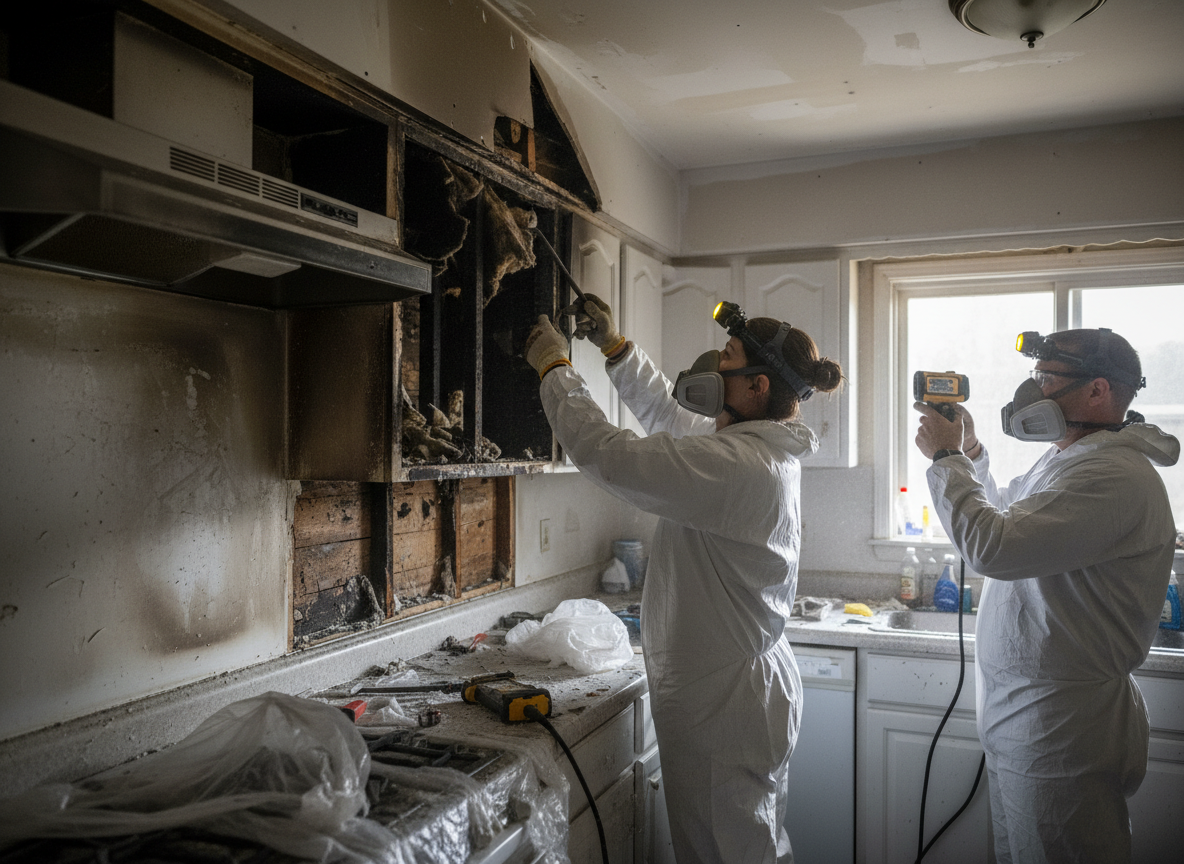
In Edison homes following a kitchen fire, hidden smoke damage typically appears first in HVAC ducts, behind baseboards, and within insulation, and it can be identified by running a flashlight along seams for gray soot lines and using a moisture meter on drywall within the first 48 hours.
Inspecting HVAC Systems and Vents
Kitchen fires in Edison send fine soot through forced-air systems common in Kern County homes built before 1990. Start at the return vents near the floor and remove the grille to look for oily residue on the filter housing. Run the blower on high for five minutes with windows open, then check supply registers in bedrooms for new dark streaks that were not present before the fire. In the hot arid summers of the San Joaquin Valley, these particles dry and bond quickly to metal surfaces, making early detection easier than in humid regions. If streaks appear, shut the system down to avoid spreading soot further into living spaces. Homeowners near Bakersfield often overlook the attic unit, so climb into the crawl space with a headlamp and examine the evaporator coil fins for gray film that reduces airflow over time.
Examining Wall Cavities and Insulation
Smoke travels through electrical boxes and plumbing penetrations in Edison's older single-story ranch homes. Remove outlet covers on shared walls between the kitchen and adjacent rooms, then shine a light into the opening to spot discoloration on the paper facing of fiberglass batts. Press a white paper towel against the drywall edge; any transfer indicates particulate migration. Mild winter temperatures in the valley keep these cavities dry, so moisture meters read normal even when soot is present, requiring visual confirmation instead. Check behind kitchen cabinets by loosening the toe-kick panel and looking upward for soot lines along the stud faces. Document each location with photos before replacing covers so restoration crews can prioritize those areas.
Testing for Lingering Odors in Hidden Spaces
Persistent smoke odor after a kitchen fire often signals trapped particles in Edison attics or under sinks. Close all exterior doors, turn off fans, and walk through each room with a damp cloth to wipe surfaces while noting where the smell intensifies. In the San Joaquin Valley's low-humidity air, odors concentrate in porous materials like carpet padding and acoustic ceiling tiles rather than evaporating quickly. Use a smoke detector test spray near suspected spots; if the alarm triggers faster than normal, soot has likely coated the sensor. Focus on the space above kitchen cabinets where grease and smoke combine, as this layer resists simple airing out.
When Professional Assessment Becomes Necessary
If soot appears on more than two interior surfaces or odors remain after basic ventilation, contact specialists for kitchen fire cleanup. Technicians use particle counters and borescopes to reach voids that homeowners cannot safely access. For properties in Edison and surrounding Kern County neighborhoods, this prevents secondary issues during the dry summer months when wind can redistribute settled particles. Review the guide on professional odor removal after electrical fires to understand when DIY methods fall short. Early intervention at the 12299 Edison Hwy location keeps damage contained before it reaches nearby Bakersfield homes through shared utility lines.