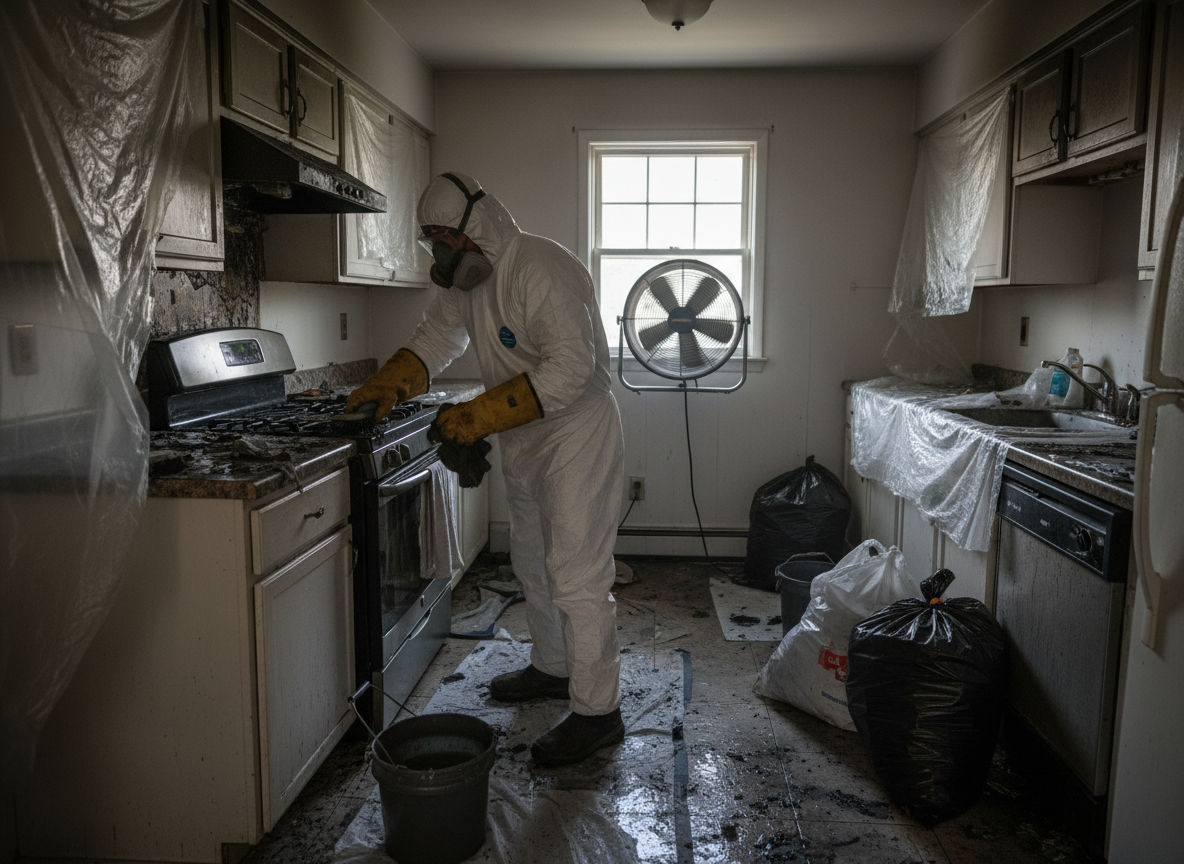
Kitchen fires in Edison often start from grease or appliance faults and quickly coat cabinets, drywall, and HVAC systems with oily soot. Older housing stock along Edison Highway tends to have plaster walls and limited attic ventilation, so smoke travels farther before settling. Hot arid summers in the San Joaquin Valley dry residues fast, locking them into porous surfaces and making removal harder if not addressed within hours. Mild winters reduce heating-related fires but do not change the need for thorough duct cleaning after any kitchen incident.
Technicians begin by isolating the kitchen to prevent cross-contamination into living areas common in single-story Kern County ranches. HEPA vacuums and specialized degreasers lift soot without driving it deeper into wood framing or laminate. Residue left in range hoods or behind outlets can cause ongoing odors, especially when valley winds push air through unsealed gaps. Final air scrubbing and surface sealing restore safe use while meeting local building expectations for post-fire habitability.
Edge cases include fires that reach under-cabinet wiring or migrate into adjacent laundry rooms through shared soffits. In these situations, partial demolition is required before cleaning to reach hidden pockets. Homeowners sometimes attempt DIY wiping, which spreads the oily film and raises restoration costs. Prompt professional containment limits secondary damage from smoke settling on furniture and textiles throughout the house.
Technician insight
In Edison, the thing that catches most people out with Kitchen fire cleanup is how the hot arid summers dry oily soot into older plaster and wood framing along Edison Highway, so residue that looks wiped away still off-gasses once the AC kicks on in summer.
Grease Fire Spread in Edison Kitchen
A cooking fire coated cabinets and sent smoke into the HVAC of a single-story home near Edison Highway. Inspection showed residue inside the ductwork and behind the range. Containment, degreasing, and duct cleaning removed the particles. The kitchen returned to daily use without lingering odors.
How it works
- 1
Initial Assessment
Inspect the kitchen and adjacent spaces to map soot migration and identify affected materials.
- 2
Containment and Safety
Set up barriers and negative air to stop smoke particles from spreading to unaffected rooms.
- 3
Soot and Residue Removal
Apply degreasers and HEPA extraction to cabinets, walls, ducts, and hard surfaces.
- 4
Odor Neutralization and Sealing
Treat remaining odors and apply sealers where needed before returning the space to use.
Pricing
Pricing varies by fire size, affected square footage, and whether ducts or structural elements require extra work; upfront quotes given after inspection.