2026-10-16 ·
Handling Ash and Soot Cleanup After Agricultural Burns Near Edison
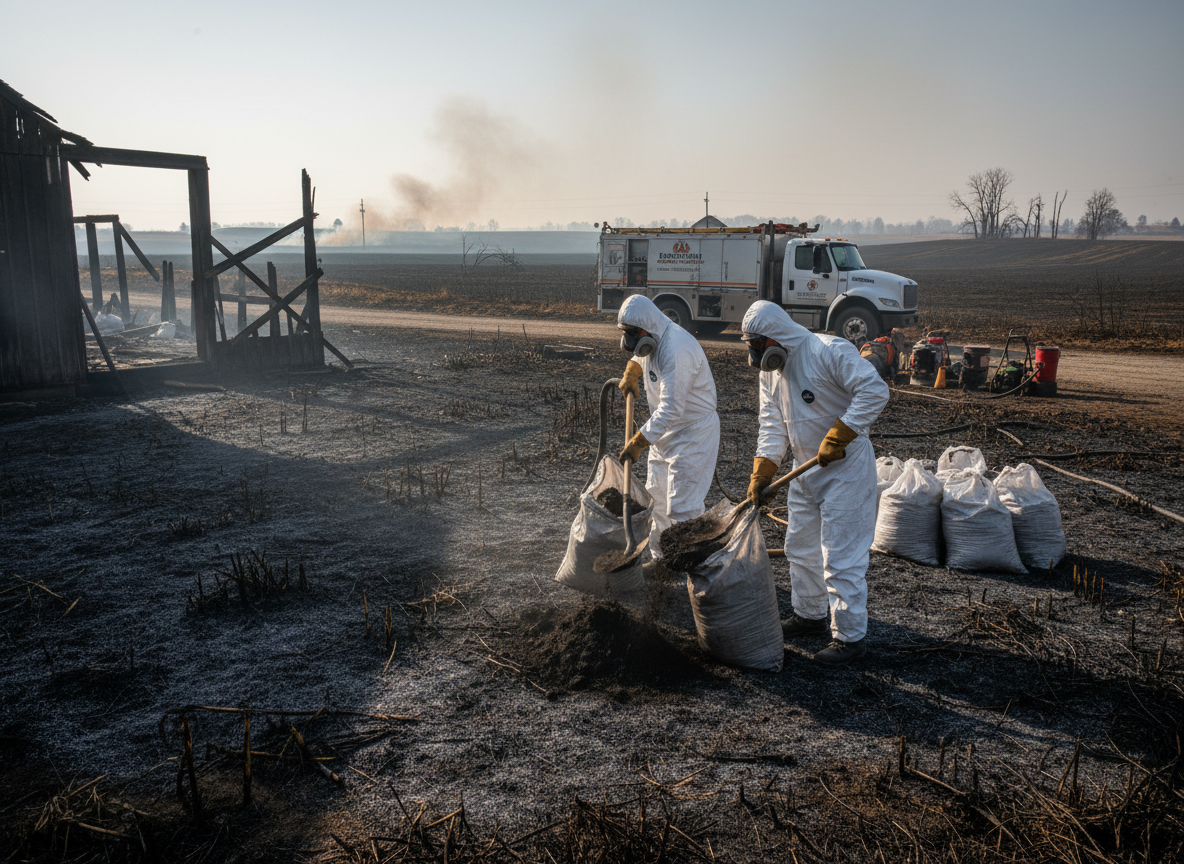
Agricultural burns in the fields surrounding Edison often deposit layers of ash and soot that penetrate homes through vents and windows within hours. Homeowners in Kern County should begin by sealing off HVAC systems and using HEPA vacuums to remove loose particles before they embed in fabrics or drywall. Waiting even one day in the hot arid summers of the San Joaquin Valley allows moisture from mild winter nights to bind the residue, making removal far more difficult.
Identifying Ash and Soot from Agricultural Burns
Ash from Kern County agricultural burns tends to be lighter and more alkaline than soot from structure fires, often appearing as a fine gray powder that drifts from nearby fields into Edison neighborhoods. Homeowners can distinguish it by its lack of oily residue and by testing a small sample on white paper where it leaves minimal smearing compared to combustion soot. In the San Joaquin Valley, these deposits frequently accumulate on rooflines and in attics during peak burn seasons, then migrate indoors through unsealed gaps common in older housing stock. Early identification prevents the particles from reacting with household surfaces during the area's temperature swings between hot days and cooler evenings.
Safe Cleanup Methods for Residences in Edison
Begin exterior cleanup by dampening surfaces with a low-pressure hose to avoid stirring dust into the air, then use stiff brushes on concrete driveways and walkways around Edison properties. Inside, work room by room with microfiber cloths slightly dampened in a mild detergent solution to lift residue without spreading it. Vacuum upholstery and carpets using machines equipped with multi-stage filtration, emptying canisters outdoors away from living spaces. For attic areas common in local single-story homes, remove insulation if heavily coated rather than attempting surface cleaning, as embedded particles will continue to shed. Always wear N95 respirators during these steps because the alkaline nature of farm ash can irritate lungs even after initial settling.
When Professional Soot Removal Is Necessary
When ash has infiltrated HVAC ducts or settled behind walls, DIY efforts often push particles deeper into the system. Soot removal teams use negative air machines and specialized sponges that lift residue without water damage, a method especially useful after repeated burns near Bakersfield. Smoke remediation becomes essential if odors persist beyond two weeks, as the valley's dry air can trap volatile compounds in porous materials. Homeowners should also consider odor removal after fire services when agricultural soot mixes with household dust in older Edison homes built before modern insulation standards.
Preventing Long-Term Damage in Kern County's Climate
The hot arid summers accelerate drying of any residual moisture used during cleanup, which can leave behind alkaline stains on painted surfaces if not neutralized. Mild winters bring occasional fog that rehydrates particles, allowing them to bond with wood framing over 8–12 weeks. Sealing cleaned surfaces with appropriate primers rated for alkaline exposure helps block future migration. Properties along Edison Hwy benefit from regular filter changes in HVAC units, as prevailing winds carry fresh ash from surrounding fields throughout the year. Monitoring attics after each burn season catches buildup before it affects indoor air quality during temperature inversions typical of the San Joaquin Valley.
Residents dealing with repeated agricultural ash events can review related guidance on what influences fire damage restoration costs in Edison California to understand variables like particle volume and material porosity. Our team operating from 12299 Edison Hwy, Edison, CA 93220 remains available 24/7 for assessments when residue exceeds standard household cleaning capabilities.