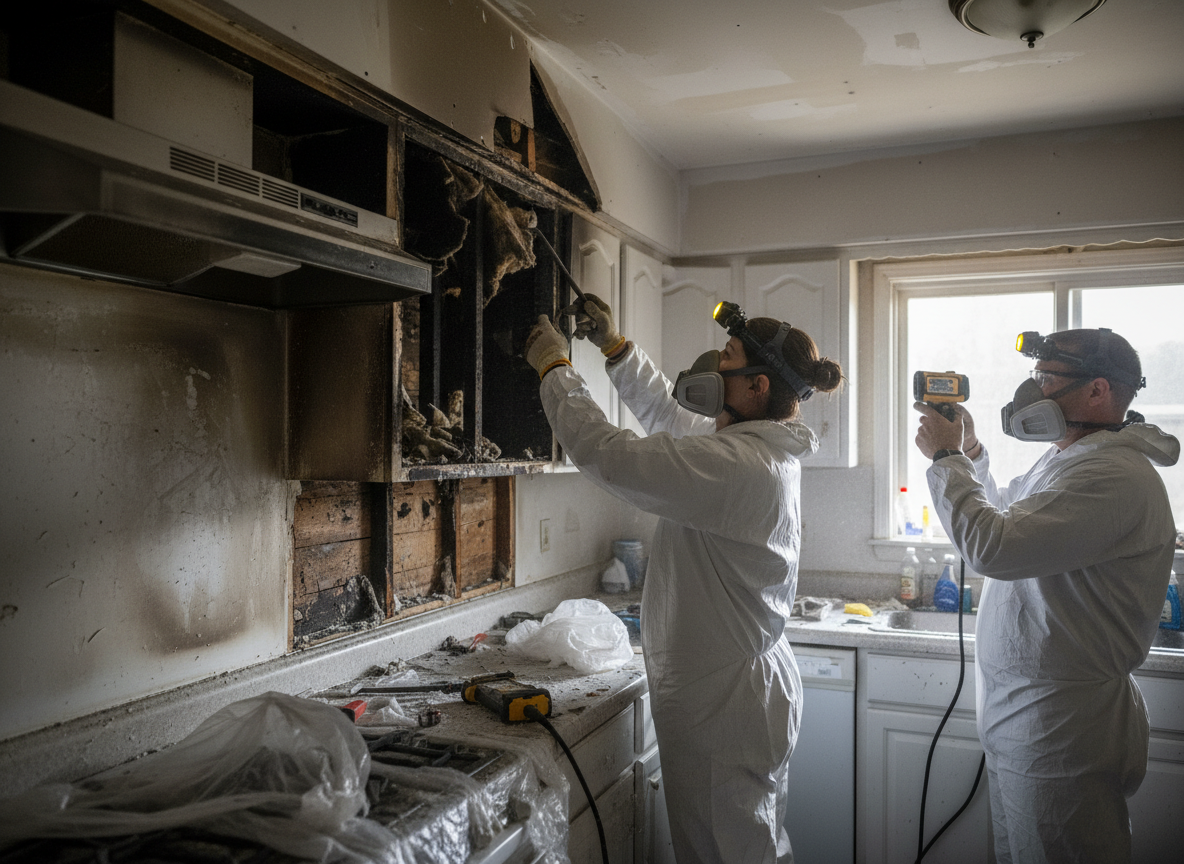
Fire Damage Restoration Edison responds directly to Shafter calls from the base at 12299 Edison Hwy. Hot arid summers in the San Joaquin Valley dry out vegetation and older wood-frame homes built along Central Avenue and Lerdo Highway, so crews prioritize rapid board-up and soot removal before winds carry ash into neighboring fields. Mild winters still bring occasional cold snaps that can freeze standing water left after suppression, requiring heaters and dehumidifiers staged on-site within hours.
Shafter lots often back onto agricultural edges with limited side access, so equipment trailers stage on wider streets like Shafter Avenue while technicians work around irrigation ditches that can channel runoff during cleanup. The same dry air that speeds initial charring also lengthens drying times for drywall and insulation once water is introduced, so dehumidification plans account for low humidity levels typical through harvest season.
Homeowners near Mannel Park and Shafter High School see crews daily during peak fire months. Work starts with safety checks on single-story ranch houses common in the 1950s-1970s stock, then moves to content cleaning before reconstruction begins.
Around Shafter
We regularly work near:
- 📍Shafter High School
- 📍Mannel Park
- 📍Shafter Airport
- 📍Central Avenue
- 📍Lerdo Highway
Fire Damage Restoration Edison in Shafter — Local Notes
- •Mid-century wood-frame homes along Central Avenue and surrounding blocks require extra attention to hidden soot in attic spaces during arid summer restorations.
- •Wind across open fields near Lerdo Highway can redistribute ash after initial cleanup, so final air scrubbing is scheduled after weather calms.
- •Narrow driveways common on older Shafter lots limit equipment access, so smaller portable units are used instead of full-size trailers.
- •Mild winter nights can leave residual moisture in slab foundations if not addressed promptly after suppression.