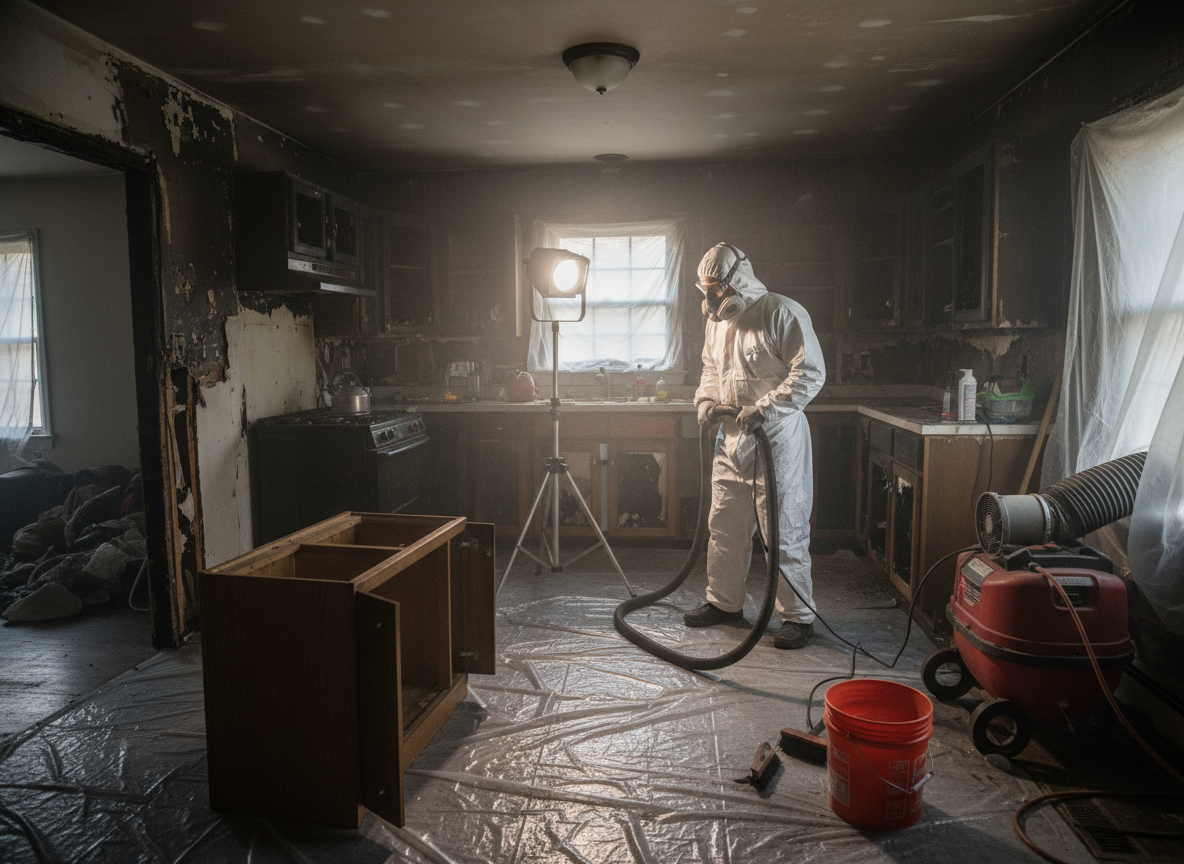
Smoke from structure fires or nearby wildfires travels readily through the dry air of Edison summers and settles into the porous materials common in Kern County ranch homes built before the 1980s. Residue contains acidic compounds that etch metal fixtures and discolor drywall even after visible soot is wiped away. In Edison the low humidity means particles remain airborne longer, allowing them to infiltrate HVAC ducts that run through attics with minimal insulation.
Older homes near Edison Highway often have single-pane windows and unsealed electrical boxes that let smoke migrate into wall cavities during the mild winter months when residents close up the house. Standard household cleaners fail to neutralize these deposits and can drive the odor deeper into carpet padding or wood framing. Restoration crews must use pH-neutral agents and air scrubbers sized for the square footage while monitoring humidity to avoid warping the gypsum board typical in San Joaquin Valley construction.
After a fire in the surrounding Bakersfield area, smoke can enter Edison homes through shared utility easements and irrigation ditches that channel airflow across flat terrain. Technicians test for hidden contamination by cutting small inspection openings in ceilings and behind outlets rather than relying on surface readings alone. This step prevents callbacks when seasonal winds stir up remaining particulates months later.
Technician insight
In Edison, the thing that catches most people out with smoke damage restoration is how the flat San Joaquin Valley terrain and dry summer winds push smoke into crawl spaces of older homes along Edison Highway, where it sits until the first winter rains raise humidity and reactivate the odor.
Smoke infiltration after nearby field burn
A ranch home east of Edison picked up heavy smoke from an agricultural burn. Inspection found residue inside the attic insulation and along HVAC returns. Crews sealed and cleaned the duct system, treated the drywall cavities, and ran air scrubbers for three days until readings cleared.
How it works
- 1
Initial Assessment
Technicians inspect all affected rooms, HVAC systems, and attic spaces to map smoke migration paths specific to Edison construction.
- 2
Containment and Ventilation
Negative air machines isolate contaminated zones while fresh air is introduced to prevent cross-contamination into unaffected living areas.
- 3
Surface and Cavity Cleaning
HEPA vacuuming, chemical sponges, and thermal fogging address both visible soot and embedded odors in drywall, insulation, and ductwork.
- 4
Final Verification
Air quality sampling and odor checks confirm residue removal before any reconstruction begins.
Pricing
Pricing varies by smoke penetration depth, affected square footage, and whether HVAC cleaning is needed; upfront assessments provided before work begins.