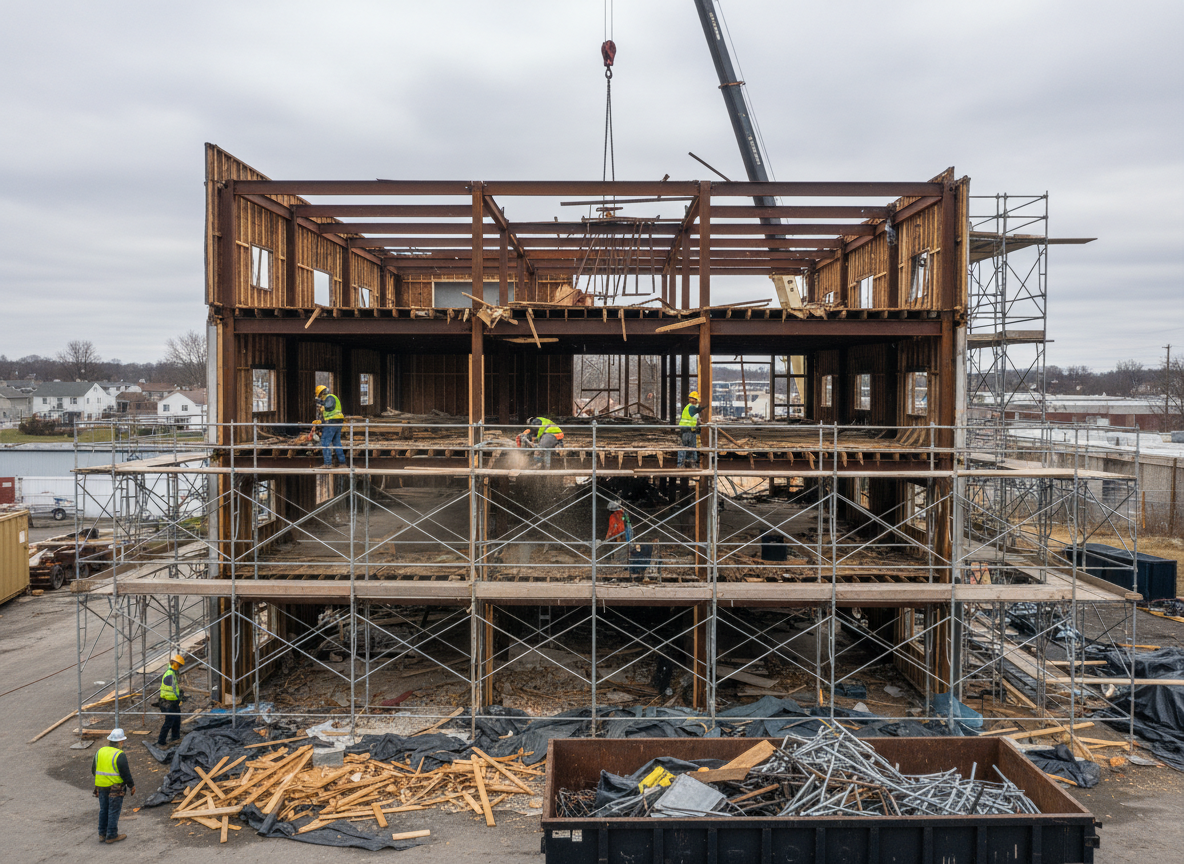
In Edison and surrounding Kern County neighborhoods, many homes feature older wood-frame construction exposed to the San Joaquin Valley's hot arid summers that dry out framing and increase soot penetration. After fire damage, hidden charring in load-bearing beams often goes unnoticed until weight tests reveal weakness. Crews must remove compromised studs and joists while protecting remaining structures from wind-driven dust that carries fine ash into new cuts. Local building codes require engineered replacements that match original seismic bracing common in rural Kern County builds.
Mild winters allow year-round exterior repairs but create challenges when temperature swings cause rapid expansion in metal connectors left near fire zones. Technicians inspect for water intrusion from suppression efforts that can warp subfloors in Edison's clay-heavy soils. Replacement materials are selected for fire resistance ratings that exceed older installations, and all work follows Kern County permitting for structural changes near agricultural zones where equipment vibration adds stress.
Edge cases include partial roof collapses where smoke has degraded trusses without visible burn marks, requiring moisture mapping and load calculations specific to valley wind patterns. Crews coordinate with utility providers along Edison Highway corridors to isolate lines before demolition begins. Final inspections verify that repaired sections meet current fire separation standards for homes near Bakersfield agricultural operations.
Technician insight
In Edison, the thing that catches most people out with structural repair after fire is how the arid San Joaquin Valley summers dry framing so thoroughly that smoke damage travels deeper into studs than expected, especially in older homes along Edison Hwy where clay soils hold moisture from suppression and create hidden rot weeks later.
Fire-damaged beam replacement near Edison Highway
A single-family home in Edison suffered attic fire spread that weakened ceiling joists. Inspection revealed charring extending into load-bearing walls due to dry summer conditions. Crews removed compromised framing, installed new engineered lumber, and reinforced connections to handle local wind loads. The structure passed Kern County inspection and returned to safe use.
How it works
- 1
Initial Assessment
Technicians evaluate visible and hidden structural damage at the Edison property, documenting char depth and compromised framing.
- 2
Debris and Hazard Removal
Unsafe sections are cleared while containing ash that can spread in San Joaquin Valley winds.
- 3
Structural Replacement
Damaged beams, joists, and supports are replaced with code-compliant materials suited to local arid conditions.
- 4
Finishing and Verification
Repairs are completed and inspected for compliance with Kern County requirements before final sign-off.
Pricing
Costs depend on damage extent, materials needed, and permit requirements; site assessment provides accurate scope.