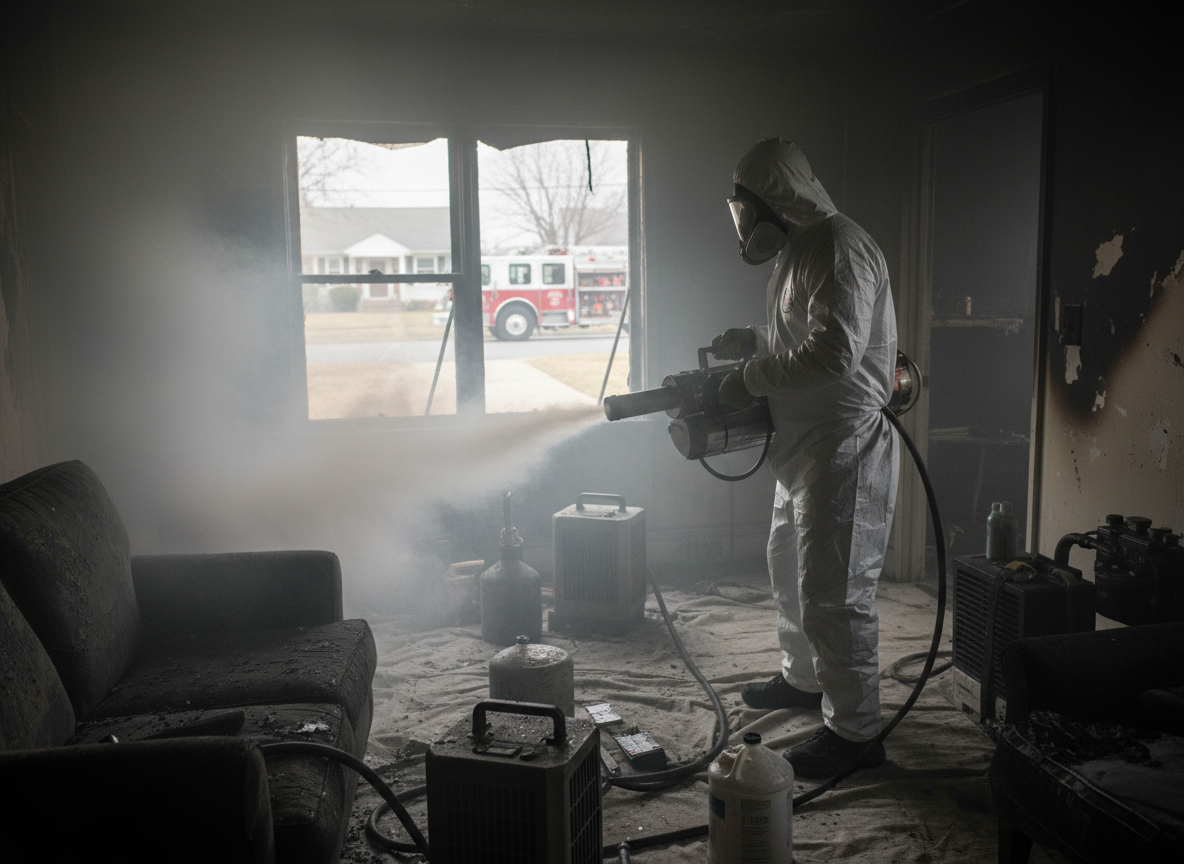
Smoke from structure fires in Edison often embeds in the porous materials common to older Kern County homes, including drywall, insulation, and wood framing exposed to decades of hot arid summers. These conditions allow volatile organic compounds to linger long after visible soot is cleared, especially when mild winters reduce natural ventilation. Standard air fresheners fail here because they mask rather than break molecular bonds in the residue. Technicians must use thermal fogging combined with hydroxyl generators to reach cavities behind cabinets and under flooring where valley dust mixes with combustion byproducts.
Edge cases arise in Edison properties near agricultural fields where wind can carry smoke into HVAC systems, coating coils and ductwork with a film that re-releases odors during temperature swings. Code requirements in Kern County mandate proper ventilation during treatment to avoid trapping chemicals indoors, and crews inspect for hidden moisture from suppression efforts that can breed mold alongside smoke odors. Homeowners sometimes attempt DIY ozone machines, which can damage rubber seals and electronics without fully addressing protein-based smoke from kitchen fires common in the area.
Successful odor removal requires sequential steps starting with source identification using specialized meters, followed by cleaning of all affected surfaces with alkaline solutions formulated for soot. In the San Joaquin Valley, low humidity accelerates drying but can leave residues if not rinsed properly, leading to recurring smells when heaters activate in winter. Final verification involves sealing treated areas and monitoring for 48 hours to confirm no re-emergence before reoccupancy.
Technician insight
In Edison, the thing that catches most people out with Odor removal after fire is how the mild winters let smoke settle into the crawl spaces of older homes along Edison Hwy, where valley dust already coats everything and makes standard cleaners ineffective without extra agitation.
Smoke in Older Edison Residence
A kitchen fire sent smoke through the single-story home near the highway. We found residues had traveled into wall cavities and settled in the crawl space mixed with accumulated dust. Hydroxyl units ran for three days while surfaces were cleaned, and the odor did not return after the system was restored.
How it works
- 1
Initial Assessment
Technicians inspect all affected rooms at the Edison property, mapping smoke migration paths through walls, attics, and HVAC using detection equipment.
- 2
Source Removal
All charred materials and loose soot are extracted before any odor treatment begins to prevent recontamination.
- 3
Neutralization Application
Thermal fogging and hydroxyl processing penetrate porous surfaces common in San Joaquin Valley construction.
- 4
Verification and Sealing
Air quality testing confirms odor elimination, followed by application of encapsulants where needed.
Pricing
Pricing depends on square footage affected and extent of smoke penetration; contact for upfront assessment.