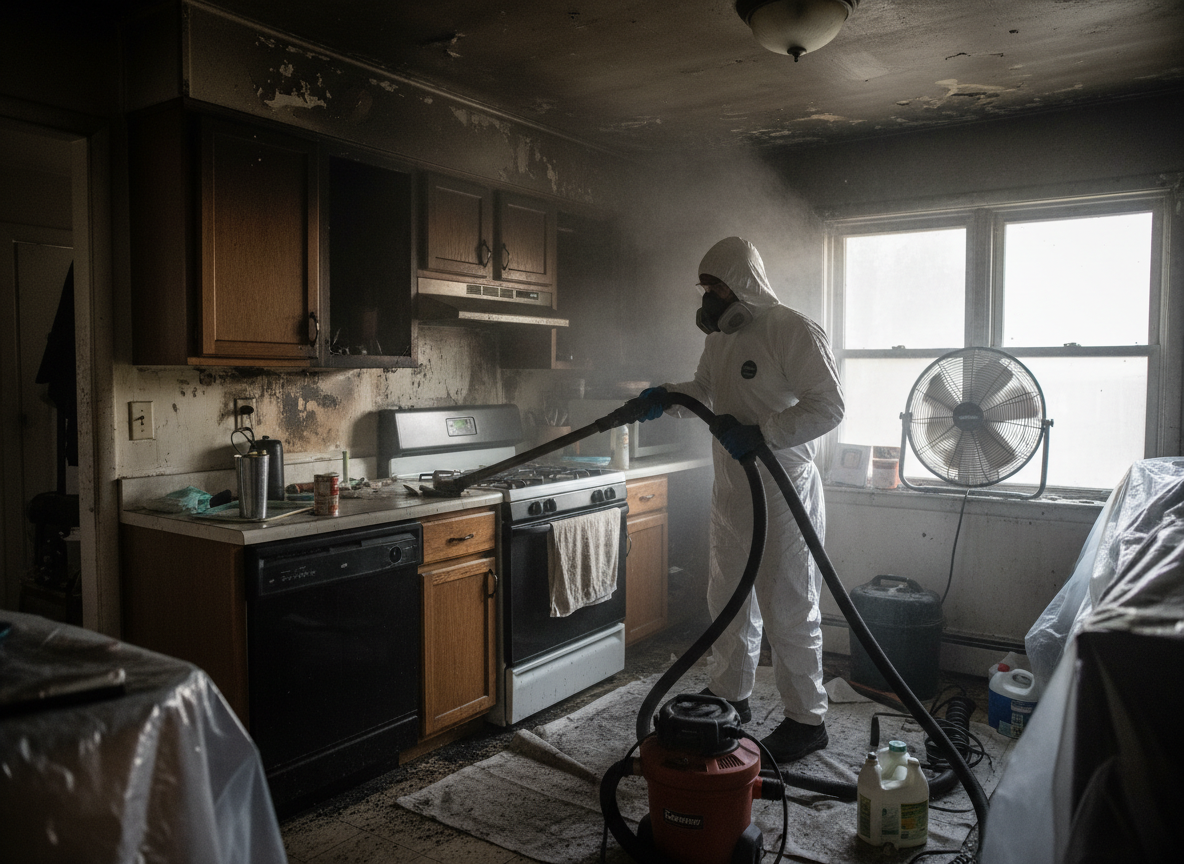
Smoke from structure fires in Edison homes often penetrates deeply into the porous materials common in San Joaquin Valley housing stock, including older plaster walls and attic insulation. The region's hot, arid summers lower indoor humidity, allowing smoke particles to bond more tightly to surfaces and travel through HVAC systems into unaffected rooms. Remediation requires isolating affected zones, using HEPA filtration and thermal fogging to neutralize odors without spreading particulates further. Technicians must also account for mild winter moisture that can reactivate hidden residues weeks after the initial event.
Edge cases frequently arise in Edison properties near agricultural fields where smoke mixes with dust and crop residues, creating a film that standard cleaning misses on concrete slabs or metal ductwork. California building codes require verification that all combustion byproducts are removed before reoccupancy, especially in structures built before modern fire separation standards. We document every step with moisture readings and air quality tests to prevent callbacks when seasonal temperature swings occur. Homeowners often overlook subfloor cavities and behind baseboards where smoke lingers longest in the dry valley climate.
Effective smoke remediation here depends on matching the method to the fuel type burned and the home's construction era. Residues from synthetic materials common in Bakersfield-adjacent neighborhoods require different solvents than wood smoke. We avoid over-wetting surfaces because the area's low rainfall means drying times can stretch longer than expected, risking secondary mold growth in wall cavities. Every job includes sealing treated areas to block odor return during the next heat wave.
Technician insight
In Edison, the thing that catches most people out with smoke remediation is how the dry San Joaquin Valley air lets particles sink into the old plaster and underfloor cavities of homes built before the 1970s. Homeowners think wiping visible surfaces fixes it, but the next heat spell pulls the odor right back out unless those hidden pockets are treated.
Kitchen fire smoke in Edison residence
Smoke from an overheated stove migrated through open ductwork into bedrooms. We found residue on attic insulation and inside wall cavities. Containment and targeted cleaning removed the odor without disturbing the original plaster. The family returned within four days with no recurring smell during the following heat wave.
How it works
- 1
Initial Assessment
Inspect all affected rooms, test air quality, and map smoke migration paths through the property.
- 2
Containment Setup
Isolate damaged areas with plastic barriers and negative air machines to prevent cross-contamination.
- 3
Residue Removal
Apply specialized cleaners to surfaces, followed by HEPA vacuuming and odor neutralization treatments.
- 4
Final Verification
Conduct clearance testing and confirm no lingering odors before returning the space to normal use.
Pricing
Cost depends on square footage affected, depth of penetration into materials, and whether HVAC cleaning is required.