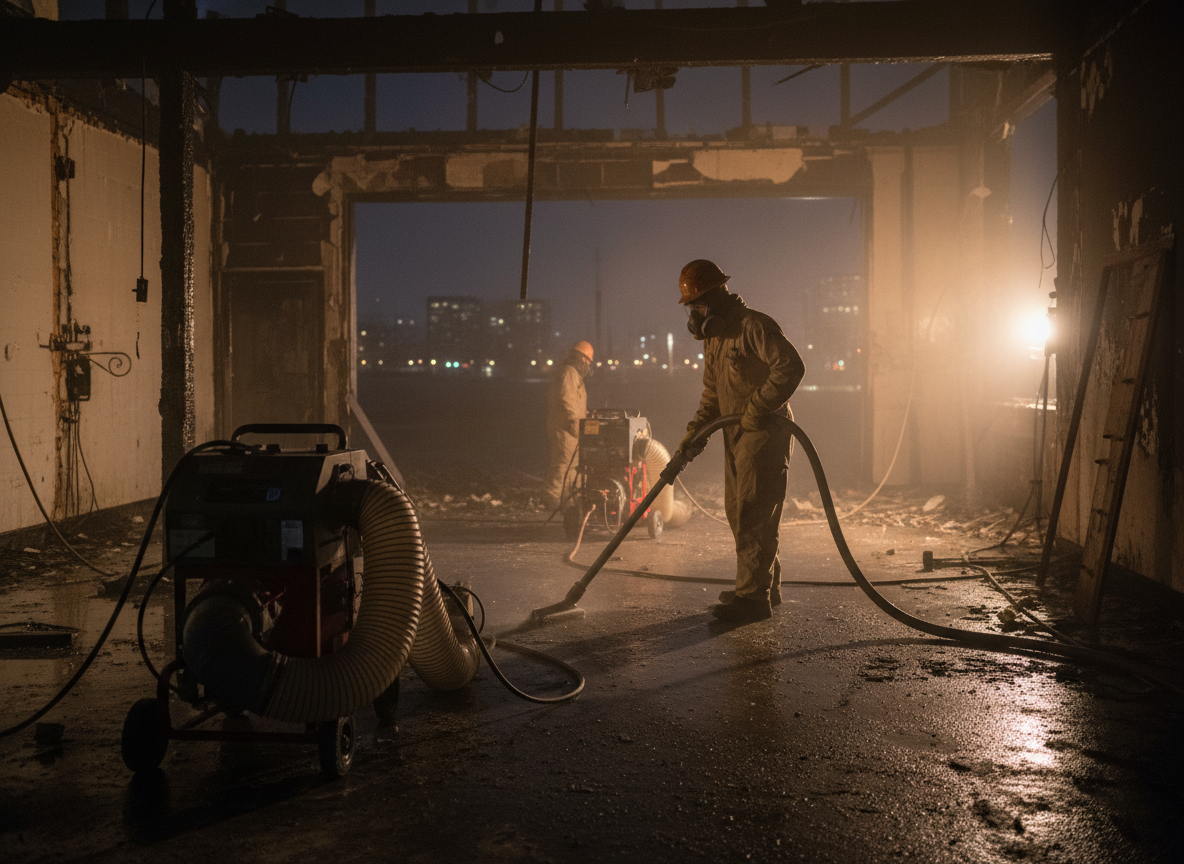
Edison sits in the San Joaquin Valley where hot arid summers dry out building materials and increase soot adhesion on surfaces. Mild winters bring occasional moisture that can set smoke residues into drywall and insulation if not addressed immediately. A 24 hour fire restoration response must account for the older single-story homes common along Edison Hwy and nearby routes to Bakersfield, where lath-and-plaster walls and limited attic access turn every job into a containment challenge.
Soot from typical kitchen or electrical fires travels far in valley winds and settles into HVAC systems that run year-round. Technicians start with negative-air machines to prevent cross-contamination between rooms, then use specialized sponges and HEPA vacuums on textured ceilings that trap particles. Delaying work even a day allows residues to etch glass and discolor cabinetry in the dry heat.
Kern County properties often feature concrete slab foundations and metal roofing that conduct heat differently than wood-frame construction farther north. During 24 hour fire restoration, crews check for hidden char behind stucco exteriors and test soil moisture around the structure because valley dust can mix with water used for suppression and create abrasive slurry inside ducts.
Local Housing Considerations
Older Edison homes built before modern fire codes frequently have knob-and-tube wiring and limited egress, which changes how crews sequence demolition and air scrubbing. Arid conditions also mean outdoor soot can re-enter through unsealed vents if barriers are not maintained overnight.
Technician insight
In Edison, the thing that catches most people out with 24 hour fire restoration is how the constant dry valley wind pushes fine soot under baseboards and into the slab edges of homes along Edison Hwy, so crews always pull trim and check the perimeter before declaring the job done.
Garage Fire Spread to Attic
A garage fire in an Edison home sent smoke through the attic shared with living spaces. Crews found soot lodged in fiberglass insulation and along roof decking due to the arid summer airflow. They isolated the attic, removed affected insulation, scrubbed rafters, and ran air scrubbers for two days until readings cleared.
How it works
- 1
Immediate Site Securement
Board up openings and set up containment to stop valley wind from moving soot into unaffected rooms.
- 2
Air Quality and Residue Assessment
Measure particulate levels and map smoke migration through HVAC runs common in Edison homes.
- 3
Soot Removal and Cleaning
Apply dry and wet cleaning methods suited to arid-climate residues on drywall, cabinets, and concrete.
- 4
Odor Neutralization and Final Clearance
Run ozone or hydroxyl equipment then test to confirm no lingering smoke smell before reoccupancy.
Pricing
Cost depends on square footage affected, HVAC involvement, and whether hidden char exists behind walls; estimates provided on site.