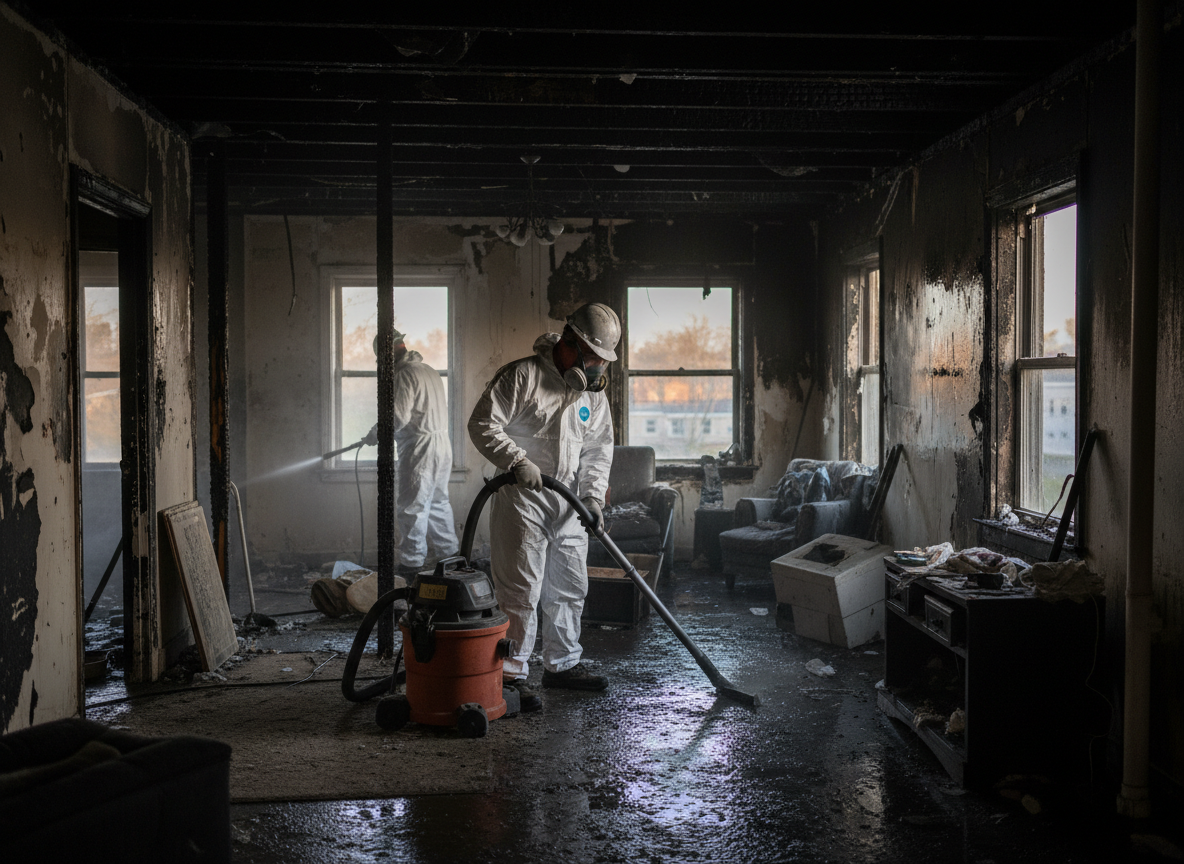
Apartment fires in Edison often involve rapid smoke travel through shared ventilation and older drywall in multi-unit buildings common across Kern County. Soot embeds in porous materials like carpet padding and insulation, requiring HEPA filtration and specialized chemical sponges rather than standard wiping. Hot, arid summers accelerate soot oxidation, turning residues more acidic and increasing the risk of permanent etching on surfaces if not neutralized within the first 48 hours. Mild winters allow continued work without weather delays but can trap humidity indoors, complicating drying after water suppression.
Edge cases include grease fires from kitchen units that produce oily residues harder to lift from concrete slab foundations typical in Edison apartments. Smoke can migrate to adjacent units through electrical conduits and plumbing chases, demanding full-building air sampling before clearance. Local terrain near the San Joaquin Valley floor means fine wind-blown dust mixes with soot, creating a compound residue that settles into window tracks and HVAC returns. Technicians must isolate HVAC systems early to prevent cross-contamination to unaffected floors.
Code considerations in Kern County require documentation of all removed materials for insurance and potential city inspections. Contents cleaning separates salvageable items from porous goods like mattresses that absorb odors permanently. Post-cleaning verification uses moisture meters and particle counters to confirm levels meet restoration standards before re-occupancy. Owner-operated crews based at 12299 Edison Hwy respond directly to limit chain-of-custody gaps common with larger regional firms serving Bakersfield.
Technician insight
In Edison, the thing that catches most people out with Apartment fire cleanup is how quickly dry San Joaquin Valley air lets soot turn acidic and bond into the older plaster and lath walls common in apartments near the Edison Hwy corridor. Homeowners try wiping it themselves and just smear it deeper before we arrive.
Smoke Migration After Kitchen Fire
A cooking fire in a ground-floor Edison apartment sent oily soot through shared vents into three upper units. Inspection showed residue had settled into carpet pads and HVAC filters across the building. Crews isolated the system, performed staged HEPA cleaning and odor treatment, then verified clearance with particle counts before tenants returned.
How it works
- 1
Initial Assessment
Inspect all affected units and adjacent spaces for smoke paths and hidden damage.
- 2
Containment Setup
Seal HVAC, doorways, and shared walls to stop soot migration to unaffected apartments.
- 3
Soot and Residue Removal
Apply HEPA vacuuming and chemical cleaning to walls, ceilings, and contents.
- 4
Odor Neutralization
Use ozone or hydroxyl generators followed by air scrubbing tailored to dry valley conditions.
- 5
Final Verification
Test air quality and surfaces before releasing units for re-entry.
Pricing
Upfront quotes provided after on-site inspection; cost depends on number of affected units and soot penetration depth.