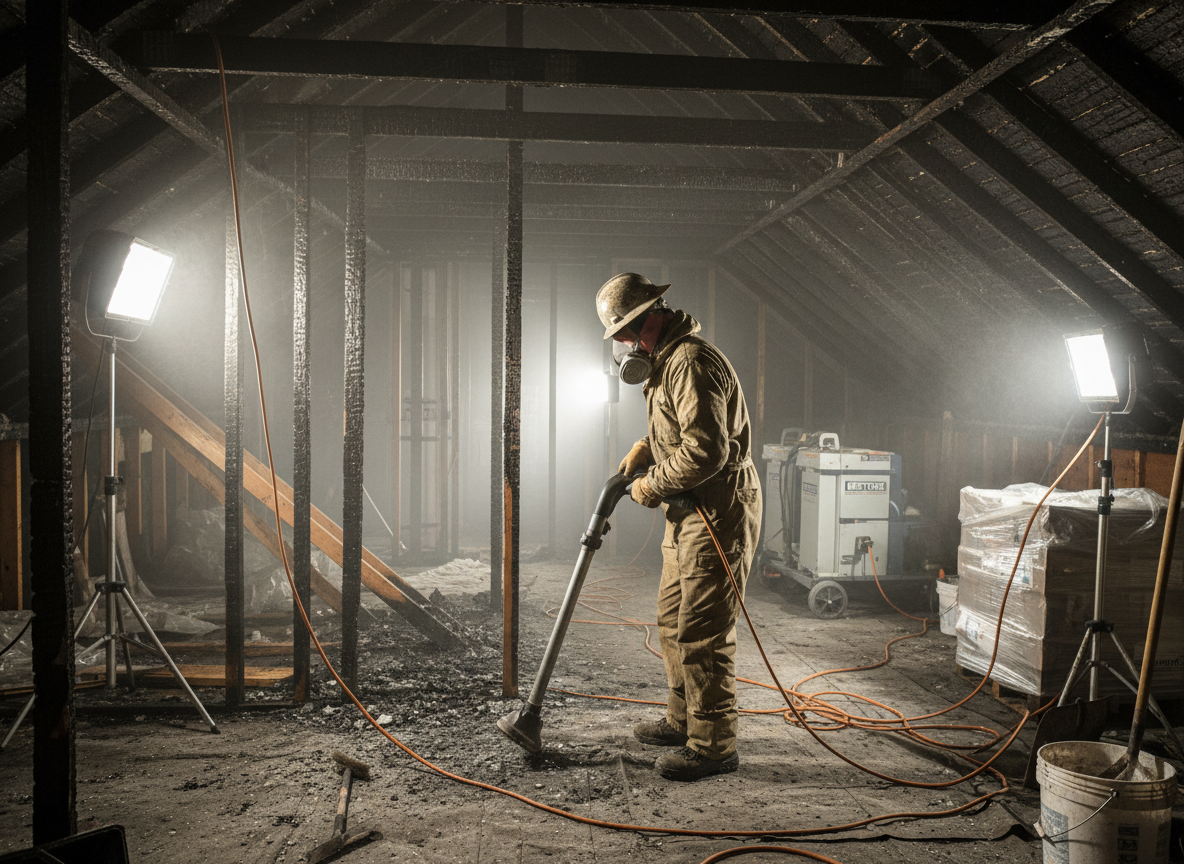
Attic fires in Edison often start from electrical faults in older ranch homes along Edison Highway or from wind-driven embers during the hot, arid summers of the San Joaquin Valley. The dry climate leaves wood rafters and blown-in insulation highly combustible, allowing flames to travel quickly across the open truss spaces typical in Kern County construction. Once contained, crews must pull back insulation in sections to locate hidden char because residual heat pockets can reignite days later when temperatures spike again.
Smoke from an attic fire travels downward through ceiling penetrations and HVAC ducts common in Bakersfield-adjacent properties, leaving acidic residue on drywall and wiring. In Edison’s mild winters, residents keep windows closed more, trapping odors inside for months if the attic is not properly ventilated and sealed during restoration. Technicians test for pH levels on surfaces and replace any insulation that contacted burning material, since cellulose or fiberglass that has been heat-damaged loses its fire-retardant properties.
Local building practices in Edison frequently include knob-and-tube wiring in homes built before 1960, which complicates attic access and increases the chance of disturbing live circuits during debris removal. After fire suppression, water from hoses can pool in the attic floor joists above living spaces, leading to hidden mold if not dried within 48 hours given the low humidity outside. Restoration includes installing temporary ridge vents to equalize pressure and prevent further smoke migration into bedrooms below.
Technician insight
In Edison, the thing that catches most people out with attic fire restoration is how the hot, arid summers dry out old cellulose insulation so thoroughly that embers can smolder for days inside wall cavities before anyone notices.
Hidden ember in Edison attic after summer electrical fire
A fire started in the attic wiring of a 1970s home near Edison Highway. Crews found smoldering embers trapped in dry insulation above the master bedroom. They removed the affected sections, treated the rafters, and installed new fire-rated insulation before any re-ignition occurred during the next heat wave.
How it works
- 1
Initial Assessment And Safety
Technicians arrive from the 12299 Edison Hwy base, secure the structure, and map fire travel paths through the attic using thermal imaging suited to Kern County’s dry framing conditions.
- 2
Debris And Insulation Removal
Charred wood, melted wiring, and contaminated insulation are removed section by section to eliminate hidden ember risks that persist in the arid Edison climate.
- 3
Smoke And Odor Treatment
HEPA air scrubbers and thermal fogging address acidic smoke residue that has settled into ductwork and ceiling cavities common in local homes.
- 4
Structural Repairs And Rebuild
Damaged rafters are sistered or replaced, new insulation meeting current Kern County energy codes is installed, and the attic is sealed against future ember entry.
Pricing
Cost depends on square footage affected, depth of char, and whether HVAC or wiring replacement is required.