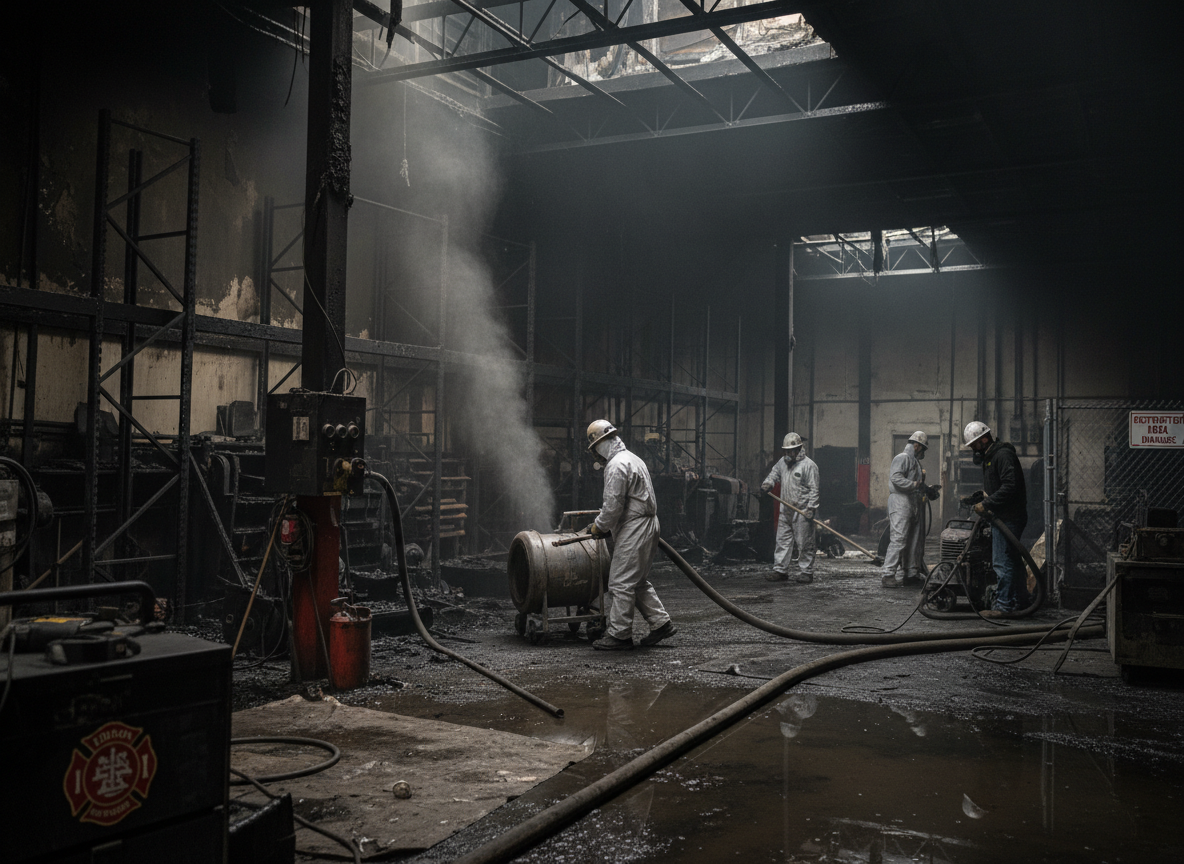
Commercial properties in Edison face unique challenges after fire events due to the hot arid summers of the San Joaquin Valley that accelerate soot adhesion on metal fixtures and HVAC systems common in warehouses and processing facilities near Bakersfield. Restoration crews must address both visible char and invisible acidic residues that corrode wiring and concrete foundations typical of mid-century commercial stock in Kern County. Seasonal wind patterns can push smoke into adjacent structures even when the original fire is contained to one building.
Edge cases often involve older single-story commercial buildings along Edison Highway where drywall and insulation contain materials that off-gas for weeks after initial cleaning. Crews test pH levels on surfaces before sealing because residual smoke can react with the valley's low humidity and cause recurring odors. Coordination with local fire codes in Kern County requires documentation of all removed materials to satisfy inspectors before re-occupancy.
Water used during suppression in arid conditions frequently pools under slab foundations common in Edison commercial sites leading to secondary mold risks if not extracted within 48 hours. Technicians use moisture mapping tools calibrated for the region's clay-heavy soils that retain water longer than sandy areas closer to Bakersfield. This step prevents hidden damage that only appears months later during mild winter temperature swings.
Technician insight
In Edison the thing that catches most people out with commercial fire restoration is how the valley's dry summer air lets acidic soot eat into metal roof decking and conduit inside older warehouses along the highway faster than anyone expects, so you end up replacing more electrical runs than the initial burn suggests.
Warehouse Smoke Migration on Edison Highway
A small fire in a storage unit spread smoke through shared ductwork into an adjacent processing facility. We found acidic residue had already begun pitting galvanized ductwork and settled inside the compressor units. Extraction and pH neutralization of all surfaces plus targeted equipment disassembly restored operations without full system replacement.
How it works
- 1
Site Assessment
Technicians arrive within hours to document structural integrity, smoke migration paths, and inventory affected commercial equipment at the Edison location.
- 2
Safety and Containment
Secure the site, set up negative air pressure zones, and remove hazardous debris while protecting adjacent businesses along the highway corridor.
- 3
Soot and Residue Removal
Apply specialized cleaning agents to HVAC ducts, walls, and machinery followed by HEPA filtration to capture fine particles stirred by valley winds.
- 4
Structural Drying and Repairs
Extract trapped moisture from foundations and perform necessary framing or electrical replacements before final odor neutralization.
- 5
Final Inspection and Handover
Verify clearance with local Kern County standards and return the space ready for business operations.
Pricing
Pricing for commercial fire restoration varies with building size, extent of smoke penetration, and required equipment disassembly.