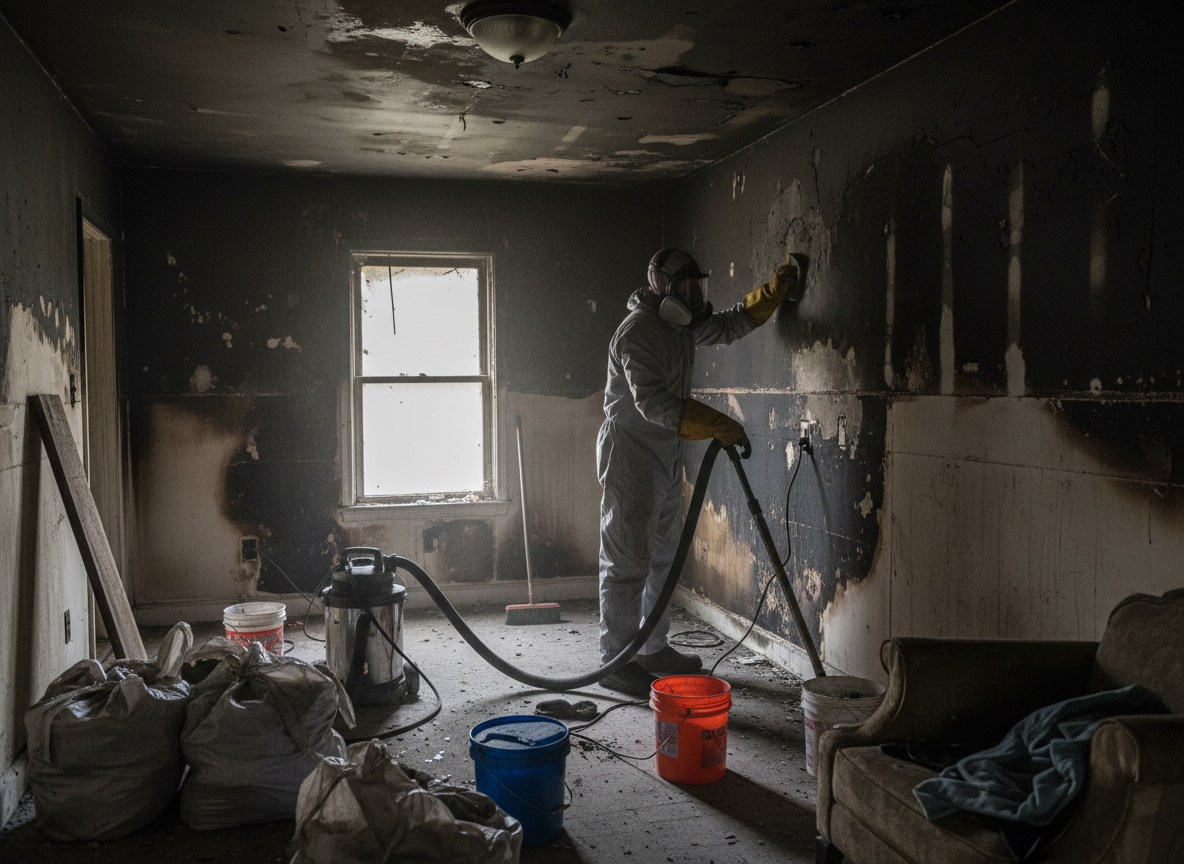
Edison sits in the San Joaquin Valley where hot, arid summers dry out wood framing and drywall quickly, letting smoke particles travel farther into wall cavities and attic spaces than in coastal regions. Older single-story homes built before the 1970s often have plaster-over-lath or early plywood sheathing that traps oily soot from kitchen or electrical fires common in agricultural areas. Restoration crews must open these cavities early because the mild winters keep humidity low enough that residue stays powdery and mobile for weeks if not neutralized.
Bakersfield winds can push smoke from roadside or field fires into Edison neighborhoods along Edison Highway, coating HVAC systems and insulation that many residents never see until odors return after the first cool night. Technicians test for pH on every surface because alkaline soot from synthetic materials etches aluminum window frames and copper wiring found in post-war Kern County builds. Leaving even small pockets untreated leads to recurring smells when temperatures swing between daytime heat and overnight valley cooling.
Full recovery here includes removing charred insulation, treating subfloors with enzyme cleaners, and running negative-air machines long enough to pull particulates from the dry soil around crawlspaces. Homeowners sometimes attempt DIY ozone treatment, but the arid air lets ozone react with remaining oils and create new chemical odors that require additional stripping. Proper sequencing—contain first, then clean, then verify with moisture meters—prevents hidden corrosion in metal ductwork that shows up months later during the next heating cycle.
Technician insight
In Edison, the thing that catches most people out with fire and smoke damage restoration is how the hot, arid San Joaquin Valley summers let smoke travel deep into the dry wood framing and loose-fill insulation common in pre-1970 homes along Edison Highway, so surface cleaning alone never removes the odor that returns when winter temperatures drop.
Garage Fire Smoke Spread in Edison
A garage fire in an Edison home sent smoke through the attached single-story house and into the attic. Crews found soot lodged in the original fiberglass batts and along the HVAC return because dry valley air kept particles airborne. They removed contaminated insulation, cleaned all ductwork, and treated surfaces before reinstalling new materials to eliminate recurring odors.
How it works
- 1
Initial Assessment
Technicians inspect Edison properties for visible char, smoke migration paths through HVAC and attics, and hidden moisture from suppression water.
- 2
Containment and Safety
Crew sets up barriers and negative pressure to keep soot from spreading into unaffected rooms while checking for structural weakening in older Kern County wood-frame homes.
- 3
Soot and Residue Removal
HEPA vacuuming and chemical sponges clean surfaces; porous materials like insulation and carpet padding are removed when smoke has penetrated due to arid valley conditions.
- 4
Odor Neutralization and Drying
Enzyme treatments and air scrubbers address lingering smells, followed by dehumidification suited to the mild winters that keep ambient moisture low.
- 5
Restoration and Verification
Repairs to drywall, flooring, and finishes are completed, then final clearance testing confirms no residual particles remain before returning the home to the owner.
Pricing
Costs depend on square footage affected, depth of smoke penetration into older construction, and whether HVAC or insulation replacement is required.