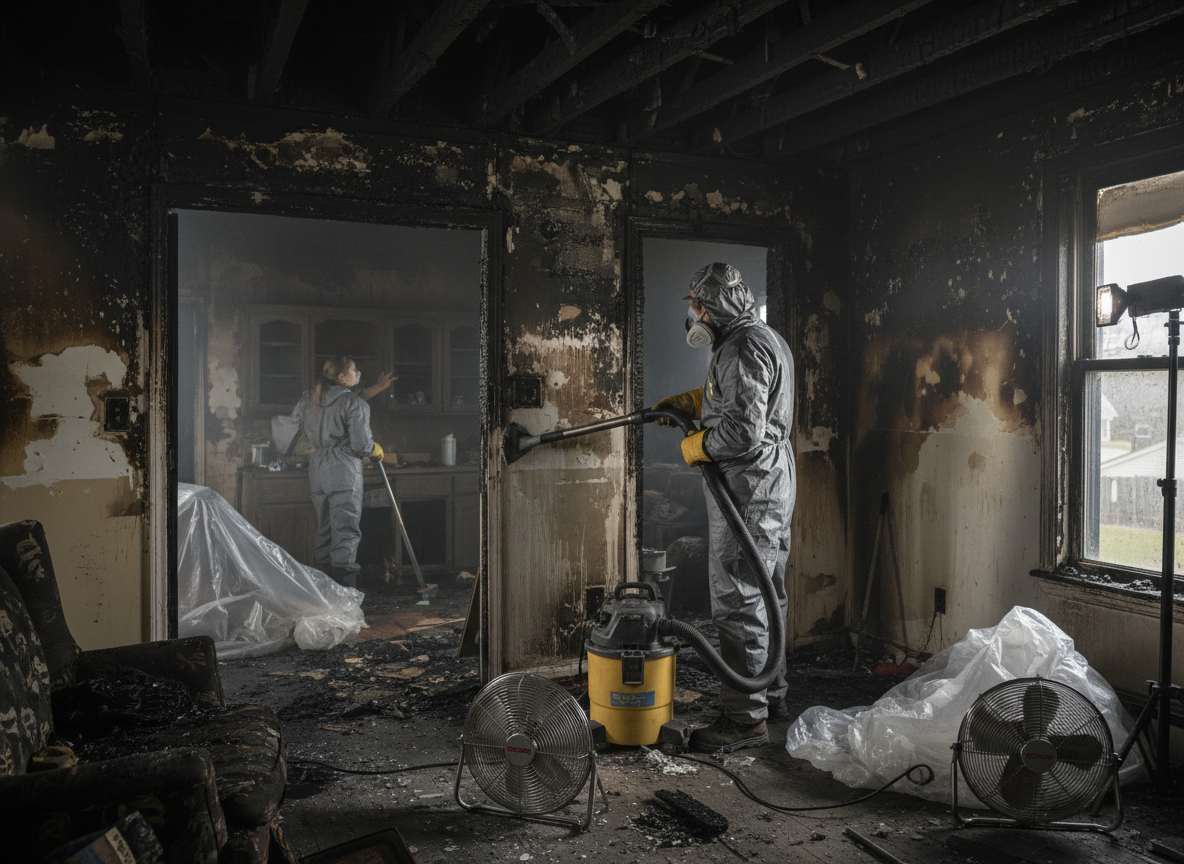
Edison sits in the eastern San Joaquin Valley where hot arid summers pull moisture from building materials quickly after a fire. This leaves soot and ash embedded deeper into drywall, insulation and HVAC systems than in coastal regions. Homes along Edison Highway and surrounding agricultural parcels often feature older wood framing and single-story layouts that allow smoke to travel through attics and wall cavities before crews arrive. Restoration crews must account for the valley's low humidity when deciding how long to run drying equipment and whether to open wall cavities for hidden residue removal.
Mild winters in Kern County mean fire incidents can occur year-round without the seasonal slowdown seen elsewhere. When a blaze starts in a ranch-style home near Bakersfield, embers and smoke frequently affect neighboring structures through shared fences and irrigation ditches. Technicians inspect for alkaline residue from burned plastics and treated lumber that can corrode metal wiring and copper pipes if left untreated. Proper neutralization prevents ongoing corrosion that shows up months later in electrical panels and plumbing fixtures common to the area's older housing stock.
Local terrain around Edison includes flat farmland with occasional irrigation canals that can complicate equipment access after a fire. Crews stage dehumidifiers and air scrubbers on concrete pads or gravel driveways rather than soft ground to avoid tracking soot back into cleaned spaces. Because many properties rely on well water or septic systems, wastewater from cleaning operations must be contained and disposed of according to county rules rather than discharged on site.
Technician insight
In Edison the thing that catches most people out with fire damage restoration near me is how fast the dry San Joaquin Valley air drives soot into unsealed wall cavities of older single-story homes along the highway. Homeowners often try to clean visible surfaces themselves and push residue deeper into insulation before we arrive, which doubles the amount of demolition needed later.
Smoke Migration Through Attic in Edison Home
A kitchen fire in a single-story residence off Edison Highway sent smoke through the attic and into two bedrooms. We found alkaline residue coating rafters and inside the HVAC return. Crews opened ceiling sections, neutralized surfaces, dried the attic space and restored airflow without replacing the entire duct run.
How it works
- 1
Initial Assessment
Technicians arrive from the Edison Highway location, document visible and hidden damage, and test air quality inside the structure.
- 2
Containment And Safety
Plastic barriers and negative air machines isolate the affected area while crews remove charred debris and secure utilities.
- 3
Soot And Residue Removal
HEPA vacuums, chemical sponges and specialized cleaners lift smoke particles from surfaces, HVAC ducts and insulation.
- 4
Drying And Odor Treatment
Industrial dehumidifiers and air scrubbers run until moisture levels stabilize, followed by thermal fogging or ozone treatment for odors.
- 5
Rebuild And Final Walkthrough
Repairs to drywall, flooring and finishes are completed, then the homeowner inspects the space before final clearance.
Pricing
Upfront written quotes provided after inspection; final cost depends on square footage affected, smoke penetration depth and whether HVAC cleaning is required.