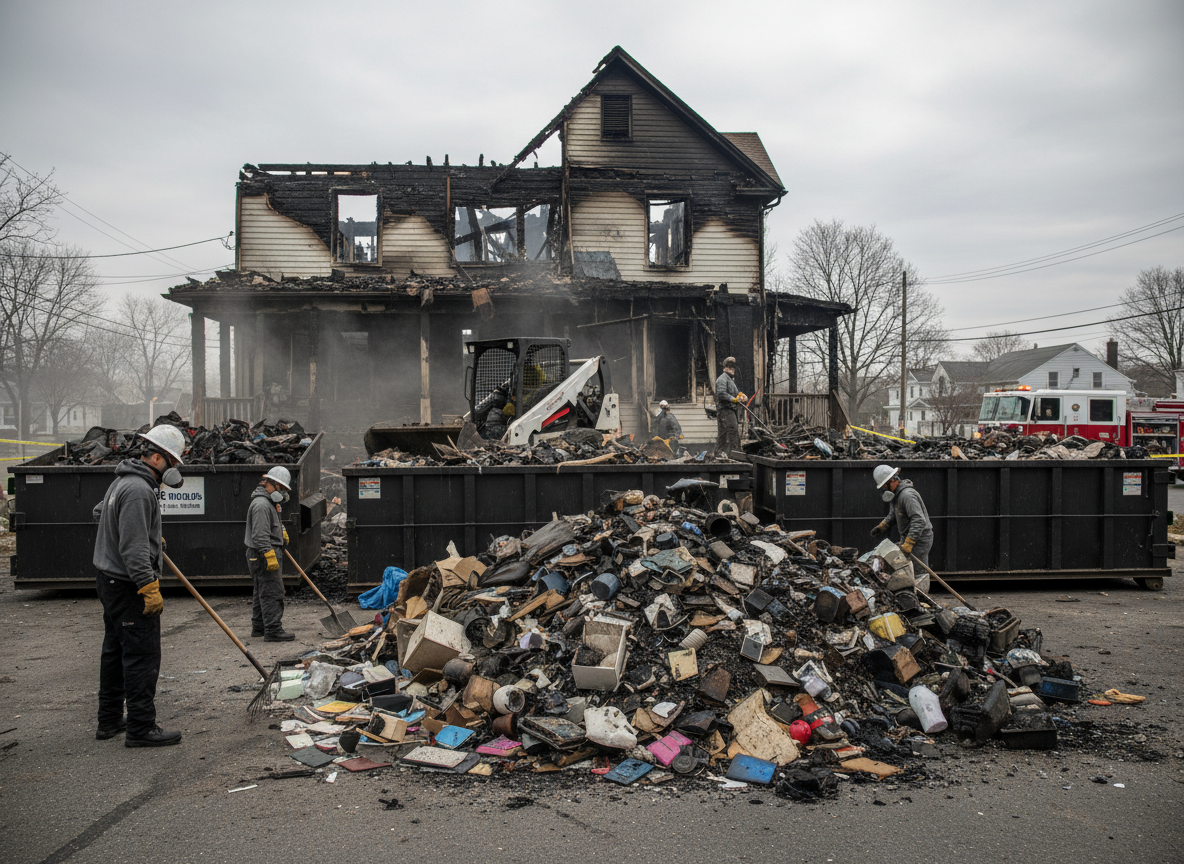
Hoarding cleanup after fire in Edison demands careful separation of charred items from salvageable belongings while containing soot that settles into stacked materials. Older single-story homes common along Edison Highway often have limited ventilation, allowing smoke to penetrate deeper into piled possessions during the hot, arid summers. Crews must work methodically to avoid disturbing settled ash that can re-contaminate cleaned surfaces when winds pick up across the valley floor.
Mild winters in Kern County extend the window for outdoor sorting but introduce moisture risks that can turn soot into acidic residues on metal and fabric items stored in hoarded spaces. Technicians use negative air machines and HEPA filtration to protect adjacent rooms in these compact Edison residences. Edge cases include hidden voids under collapsed stacks where embers may still smolder days after the initial incident.
Local soil conditions around Edison contribute to fine dust mixing with fire debris, requiring extra containment during transport to disposal sites near Bakersfield. Regulations in Kern County mandate documentation of hazardous waste volumes when hoarded materials include treated wood or plastics that release toxins when burned. Homeowners should expect phased access restrictions until air quality testing confirms safe re-entry.
Workmanship focuses on inspecting every layer of accumulated items for hidden fire damage rather than rushing volume removal. This approach prevents callbacks when residual odors surface weeks later in the dry climate. Crews coordinate with local waste facilities to handle the mixed loads typical of hoarded properties after structure fires.
Technician insight
In Edison, the thing that catches most people out with hoarding cleanup after fire is how the dry San Joaquin Valley winds drive fine soot deep into stacked paper and fabric before crews arrive, turning a contained burn into widespread contamination across multiple rooms.
Hidden Soot in Stacked Belongings
A fire started in a garage filled with accumulated items spread soot through an Edison home. We found heavy ash layers trapped between boxes and furniture that standard cleaning would miss. We isolated the space, sorted layer by layer, and removed contaminated debris while protecting the rest of the structure. The home passed air testing and was returned to use without lingering odors.
How it works
- 1
Initial Assessment
Technicians inspect the Edison property to map hoarded zones, identify soot migration paths, and note structural concerns from fire exposure.
- 2
Containment Setup
Negative pressure zones and HEPA units isolate work areas to prevent cross-contamination in the arid valley environment.
- 3
Item Sorting and Removal
Belongings are categorized for salvage, disposal, or cleaning while ash and debris are bagged for proper Kern County handling.
- 4
Deep Cleaning and Verification
Surfaces receive soot removal treatment followed by air quality checks before restoring access to the cleared space.
Pricing
Cost depends on volume of hoarded materials, extent of soot penetration, and disposal requirements.